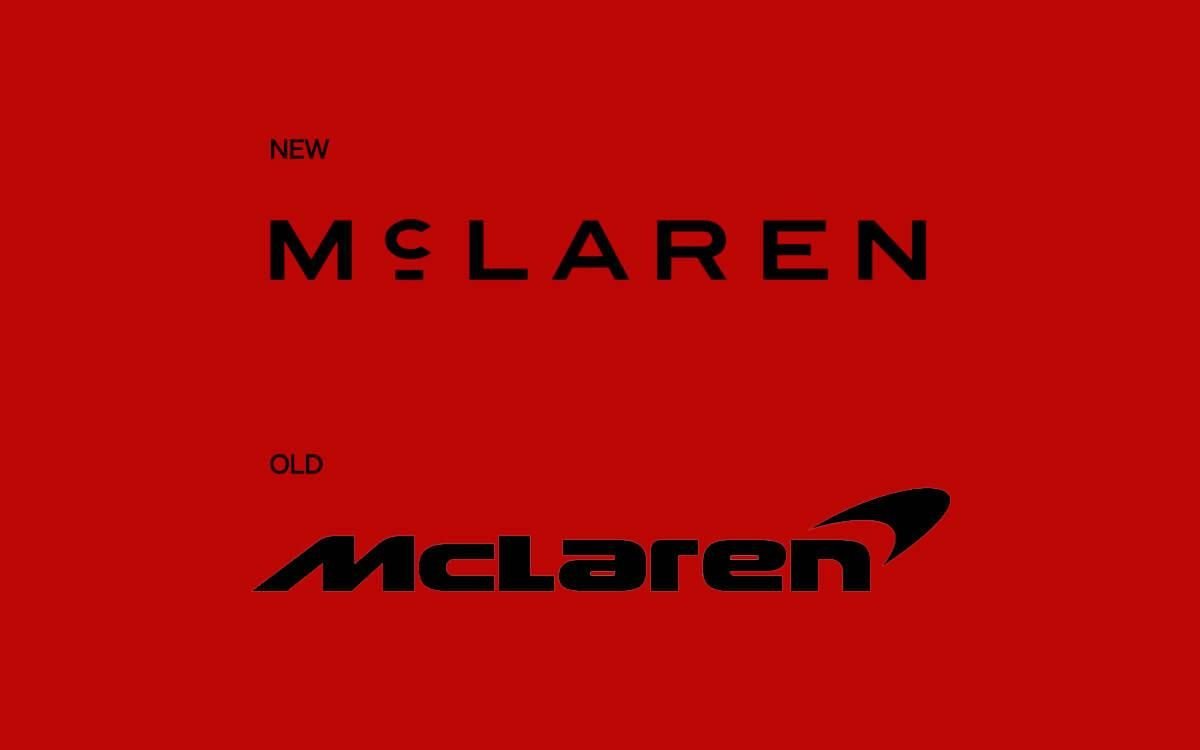
McLaren's rebranding is more than a simplified logo. Its new identity does look more universal and less aggressive than McLaren's previous supercar image, but the change is better understood as the construction of a masterbrand that must work across a broader world: road cars, racing, performance SUVs, customer experiences, personalization, community, and product development technology.
There is strong evidence for the idea that McLaren is preparing a brand that is less niche. The company has confirmed plans to expand its portfolio beyond two-seat supercars and introduce a performance SUV. However, directly linking this rebranding to a shift toward fully electric cars and AI would go too far. EV is a strategic capability available to McLaren, while AI is currently more clearly used to accelerate design and engineering processes, rather than serving as the center of its consumer identity.
A New Logo Shaped by an Old Garage
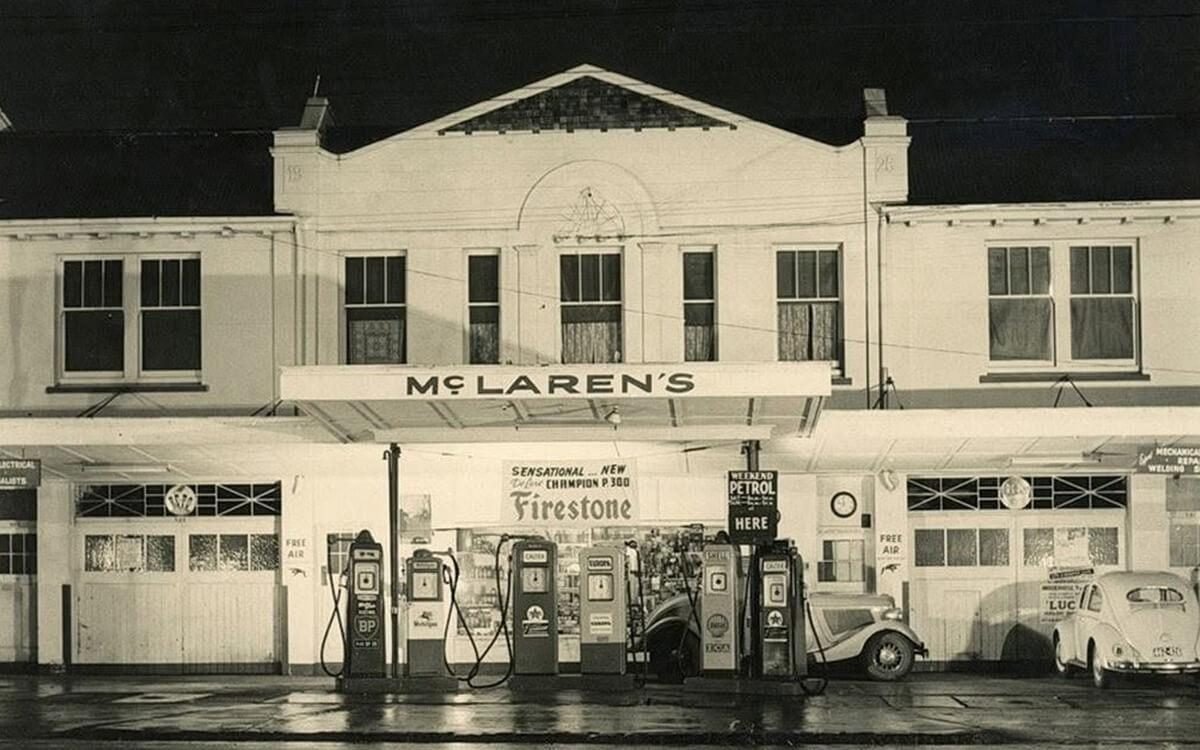
McLaren's new identity begins in a very simple place: the workshop and gas station owned by Bruce McLaren's family in Remuera, Auckland, New Zealand.
According to McLaren's official announcement, the new wordmark was inspired by the sign above the service station owned by Bruce's parents, Les and Ruth McLaren. It was there that Bruce built the car that carried him to his first racing victory.
McLaren did not copy the old sign exactly. Its letterforms were developed into a contemporary type system called McLaren Sans. The wordmark now uses uppercase letters, with a distinctive horizontal line beneath the C. The familiar Speedmark remains. Papaya also remains a central color, accompanied by a broader palette. The Speedy Kiwi symbol continues to maintain the connection with the brand's New Zealand roots.
Visually, the result is calmer than McLaren's previous identity. The old wordmark felt fast because its letterforms were slanted and closely tied to the visual language of motorsport. The new version depends less on that gesture. It is more upright, simpler, and easier to apply across more contexts.
This is where the paradox of McLaren's rebranding emerges. The company is returning to its history so that it can look more prepared for the future.
Is McLaren's Identity Becoming More Generic?
Yes, McLaren's new identity is becoming more universal. However, simply calling it generic would overlook the strategic function of the change.
Many automotive brands simplify their logos so they can work easily on screens, apps, vehicle interfaces, merchandise, dealership facades, social content, and at different digital sizes. If McLaren merely followed that pattern, it would risk losing character and looking like any other company using an uppercase sans serif wordmark.
McLaren is trying to avoid that risk by drawing details from its own archive. The family sign reference, the line beneath the C, the Speedmark, papaya, and the Speedy Kiwi create layers of story that no other brand can own.
The strategy is not to make the logo as distinctive as possible at first glance. It is to build a system that is simple, flexible, and capable of carrying a distinctive story.
This difference matters. An identity that is too specific to one category will struggle to grow when the business enters another. Conversely, an identity that is too neutral will become forgettable. McLaren has chosen a middle path: the primary form is made more universal, while its distinctiveness moves into its history, supporting symbols, color, typography, and brand storytelling.
For a growing brand, this is a sensible decision. A logo does not need to shout every attribute at once. It should be a strong enough vessel to carry more products without severing the brand's connection to its origins.
From a Supercar Image to a Masterbrand
The biggest change is not in the letterforms, but in the scope of an identity that must now unite McLaren Automotive and McLaren Racing.
McLaren says the new identity was designed as one expression connecting its past, present, and future. The company also wants to expand the ownership and fan experience through personalization, customer experiences, and community.
This means McLaren's audience is no longer positioned only as supercar buyers or Formula 1 spectators. Its ecosystem includes owners, fans, partners, racing communities, merchandise buyers, participants in exclusive experiences, and prospective customers in new product categories.
A highly sporty wordmark can work well on a high-performance two-seat car. The challenge appears when the same brand must show up on an SUV, in retail spaces, on apps, across lifestyle products, in experience programs, and in corporate communications. A more neutral identity gives McLaren room to address all of these audiences without looking out of place.
This is why the rebranding feels less niche. McLaren is shifting its center of gravity from one type of product to an entire brand world.
The Strongest Evidence Is the Expansion of the Vehicle Lineup
The goal of broadening the product range is no longer speculation. McLaren has officially confirmed the move.
In the announcement of its new identity, McLaren cited a £500 million investment program to expand its manufacturing and engineering facilities in the United Kingdom. The investment supports long-term growth, including expansion beyond two-seat supercars through a performance SUV.
A CAR Magazine report also quotes McLaren's ambition to build a complete portfolio around the supercar. Upcoming products are planned within more structured segments to protect brand value, desirability, and customer loyalty.
This fundamentally changes what the identity needs to do.
McLaren has long been known through a highly focused formula:
- two-seat cars;
- mid-mounted engines;
- low weight;
- a strong relationship with racing technology;
- an extreme driving experience;
- aerodynamic and aggressive design language.
A performance SUV does not fully fit that formula. Its dimensions, function, passenger capacity, context of use, and consumer profile are different. If McLaren's identity were too tightly tied to the supercar silhouette or to the sensation of speed alone, expanding into another category would feel forced.
The new identity addresses that problem by elevating the narrative. McLaren no longer sells only a particular vehicle form. It sells Bruce McLaren's spirit, the courage to challenge convention, engineering, creativity, and the ambition to keep moving further.
Those values can apply to supercars, SUVs, racing, or future products without requiring the brand to change its foundations again.
Is This Preparation for EVs?
EVs are likely to be part of McLaren's future technology options, but this new identity cannot yet be described as a declaration that McLaren is shifting completely to electric vehicles.
Its corporate context does support electrification capabilities. In 2025, CYVN Holdings completed its acquisition of McLaren Automotive and merged it with Forseven, a British electric vehicle company. In the transaction announcement, McLaren said the company could gain access to technology and electrification through CYVN's strategic investment in NIO, as well as Forseven's development work.
Access to technology is not the same as a decision to turn the entire lineup into EVs. The latest product strategy instead points to a more pragmatic approach. McLaren still positions hybrid technology as its primary near-term path and is preparing to develop new-generation engines and transmissions internally.
A more accurate conclusion is therefore:
- The rebranding gives McLaren an identity that is not tied to combustion engines or a single vehicle architecture.
- The new ownership structure gives McLaren greater access to EV technology.
- Near-term products still rely on hybrid performance and new engine development.
- Full EVs may still arrive when battery weight, driving character, and market conditions meet McLaren's standards.
From a branding perspective, this is a smart move. A brand does not need to declare itself an EV brand to look relevant to the future. It only needs to ensure that its identity does not become a barrier when product technology changes.
So, Is AI McLaren's New Direction?
AI is already part of how McLaren develops vehicles, but it is not yet the brand's primary promise to consumers.
McLaren uses an approach it calls AI-enhanced engineering. In an interview with Observer, McLaren Automotive Chief Programme Officer Christoph Meyer explained that the company is embedding agentic AI throughout the engineering cycle. Its purposes include exploring more design alternatives, running faster simulations, tuning components more precisely, and reducing manual and repetitive work.
The engineering platform used with Rescale and NVIDIA infrastructure combines simulation, data, engineering knowledge, and AI agents. In this context, AI is not a futuristic ornament on the dashboard. It is a tool for accelerating product development and preserving the company's engineering knowledge.
Its relationship with the rebranding is indirect but relevant. The broader McLaren's portfolio becomes, the more complex its product development becomes. The company must work on more types of vehicles without lowering its standards for performance and driving character. AI can help expand engineering capacity to handle that complexity.
However, there is no strong evidence that the new logo was created to signal McLaren as an AI company. Official statements about the rebranding focus more on Bruce McLaren's heritage, the unification of Automotive and Racing, customer experiences, community, personalization, and product growth.
AI is therefore an engine behind the transformation, not the main message on its surface.
Why Not Use a More Futuristic Identity?
When technology changes quickly, a brand needs a story that will not become outdated just as quickly.
If McLaren built an identity too visually focused on batteries, connectivity, or AI, that identity could feel dated when the next technology arrives. By returning to Bruce McLaren's family garage, the company draws from a much more stable source of meaning.
The garage represents several things at once:
- curiosity about machines;
- the courage to experiment;
- practical expertise;
- ambition that grew from a small scale;
- the relationship between people, vehicles, and competition.
Values like these remain relevant whether the power source is a V8, a hybrid, a battery, or another technology that has not yet matured today.
This is the function of heritage when it is used well in rebranding. History is not used for nostalgia, but to give change legitimacy.
McLaren seems to be saying that the company can enter SUVs, electrification, AI, and new categories because experimentation has always been part of its identity.
The New Future Could Be Retro-Futuristic
The automotive future does not always have to look sterile, emotionless, and similar to an electronic device. A more interesting direction could emerge from retro-futuristic design, reviving the visual optimism of the 1980s and 1990s with modern technology.
During those two decades, vehicle design boldly displayed assertive forms. Proportions were dramatic, lines were geometric, surfaces felt mechanical, and cockpits created the sensation that the driver was controlling a machine. The cars of the future were imagined through wedge shapes, hidden headlights, early digital panels, physical buttons, and material experiments that could not yet be fully realized.
Today's technology allows that imagination to be translated more maturely. Retro forms do not have to bring back old limitations. Beneath a design that recalls the 1980s and 1990s, manufacturers can use lightweight composite materials, hybrid or electric powertrains, active aerodynamics, AI-based simulation, digital interfaces, and modern safety systems.
This is another possible meaning behind McLaren's return to its archives. The future does not always have to be created by erasing the past. It can be built by reclaiming the character that once made cars feel aspirational, then improving it with technology that is now available.
It is important to note that the official inspiration for McLaren's wordmark comes from Bruce McLaren's family garage and the brand's early history, not specifically from the 1980s or 1990s. Retro-futurism is therefore better understood as an opportunity for a design direction, not as a product plan confirmed by McLaren.
If this direction were applied to future vehicles, McLaren could avoid the trap affecting many modern technology products: highly advanced, yet anonymous. Their silhouettes, details, and cabin experiences could regain an analog tension, while the real intelligence works quietly beneath the surface.
With this approach, modern technology does not replace character. Technology becomes a tool for reviving the design courage that once made the future feel exciting.
The Biggest Risk: Becoming So Universal That It Loses Tension
A more flexible identity also carries risk. McLaren could lose some of the visual tension that made it feel fast, exotic, and uncompromising.
Clean uppercase wordmarks are already very common in the automotive and luxury industries. If the identity is applied too cautiously, consumers may see it as part of a uniform wave of minimalism, rather than a distinctive expression of McLaren.
The success of this rebranding therefore cannot be judged by the logo alone. McLaren must prove it through the entire system:
- how McLaren Sans is used;
- how the Speedmark is given a role;
- how papaya and the new palette build recognition;
- how photography and motion communicate performance;
- how showrooms, apps, and vehicles feel connected;
- how the SUV still feels like a McLaren, rather than a volume product that merely carries its logo;
- how Bruce McLaren's story is presented without turning into excessive nostalgia.
A simpler logo demands more disciplined brand execution. The less character the main logo carries, the greater the burden placed on typography, color, sound, experience, products, and communication.
Branding Lessons from McLaren's Rebranding
McLaren's rebranding shows that visual identity often changes not because the old logo was bad, but because the future business needs more room.
There are four relevant lessons for other brands.
1. Start with Business Change, Not Visual Taste
Category expansion, the unification of divisions, and changes in audience are stronger reasons to rebrand than the desire to look modern.
2. A Simpler Identity Needs a Stronger Source of Story
Minimalism without meaning produces a generic brand. McLaren counters that risk with its family archive, custom typography, historic symbols, and founder story.
3. Do Not Lock the Brand to Today's Technology
Product technology will change. Brand values must be broad enough to encompass conventional engines, hybrids, EVs, and AI without requiring a new identity every few years.
4. Heritage Can Be a Tool for Expansion
Returning to history does not always mean moving backward. Carefully chosen heritage can provide a credible reason to enter the future.
A similar principle applies when Roku Studio develops a brand identity. A visual system should not only look relevant today. It should be able to carry a business strategy, product categories, and customer experiences that do not yet fully exist.
Conclusion
McLaren's rebranding does make its identity more universal and less tightly bound to a highly niche supercar image. However, its main goal is not to become generic. McLaren is creating one brand system that can encompass a broader business without losing its historical legitimacy.
The expansion of the vehicle lineup is the strongest explanation because the company has confirmed a performance SUV and an ambition to build a portfolio around the supercar. EV is a strategic possibility supported by access to Forseven and NIO technology, but McLaren has not shown a complete shift from hybrid to fully electric vehicles. AI is already used in design and engineering, but it is not yet the center of the rebranding message.
The logo from the old garage is therefore more than a tribute to Bruce McLaren. It is a bridge. One end anchors the brand in an authentic history, while the other gives McLaren room to move toward a far broader range of products, technologies, and audiences.
McLaren's future also does not have to resemble a sterile, fully digital vision of the future. The stronger opportunity may lie in retro-futurism: reviving the design courage of the 1980s and 1990s, then filling it with modern materials, hybrids, EVs, AI, aerodynamics, and systems. The form can feel familiar and emotional, while its capabilities remain entirely contemporary.
Frequently Asked Questions
Why is McLaren's new logo inspired by an old garage?
The new wordmark draws inspiration from the sign at the workshop and gas station owned by Bruce McLaren's family in Remuera, Auckland. The place matters because it was where Bruce built the car that carried him to his first racing victory.
Was McLaren's rebranding created to launch an SUV?
McLaren has not said that the new logo was created specifically for an SUV. However, its launch coincides with confirmation of expansion beyond two-seat supercars, including a performance SUV, so a more flexible identity clearly supports that strategy.
Will McLaren become an electric car brand?
There is no confirmation that McLaren will shift completely to becoming an EV brand. The company has greater access to electrification technology through Forseven and CYVN's relationship with NIO, but its near-term strategy still emphasizes hybrids and new engine development.
How does McLaren use AI?
McLaren uses AI primarily in design and engineering. AI helps run simulations, explore design alternatives, tune components, manage engineering knowledge, and reduce repetitive work in vehicle development.
Sources
- McLaren, “McLaren marks the next chapter with the reveal of an evolved identity,” 22 September 2026
- McLaren Automotive, “CYVN Holdings completes McLaren transaction,” 3 April 2025
- CAR Magazine, “Name redesign, new SUV, hybrids and fresh cash: McLaren's future revealed,” 22 September 2026
- Carscoops, “McLaren’s New Logo Is Inspired By An Old Garage Sign,” 22 September 2026
- Observer, “The A.I. Transforming How Cars Are Designed, Engineered and Driven,” 16 July 2026
- Daily Car Blog, “McLaren Automotive Embeds Agentic AI Across Vehicle Design And Production,” 17 March 2026